
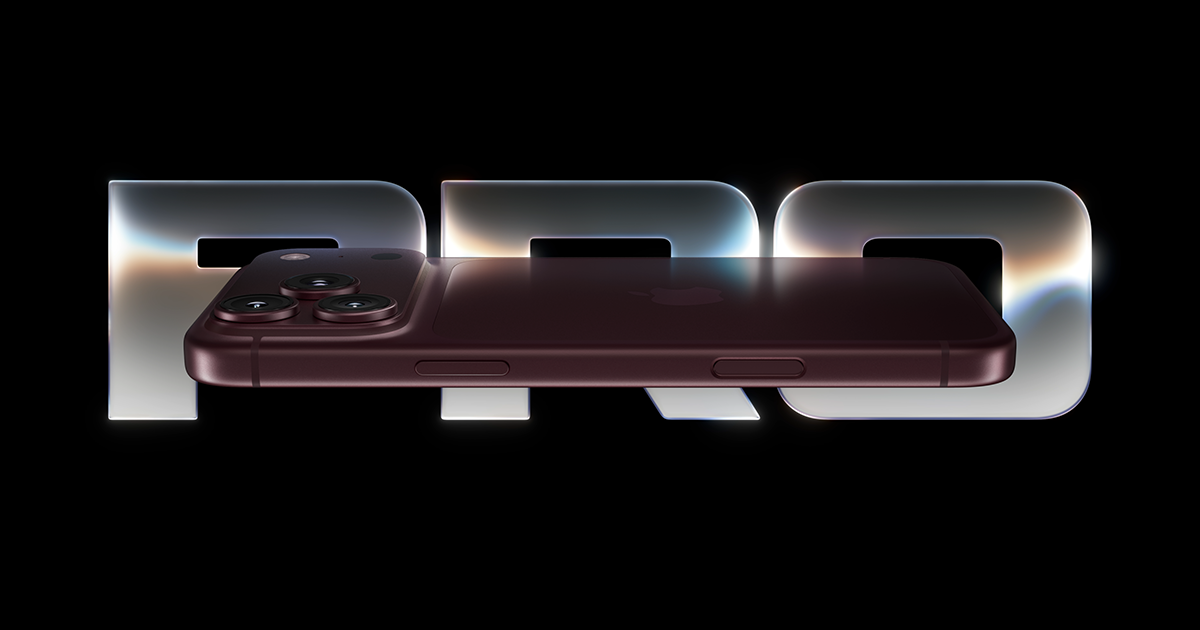
Which is the best phone: Samsung Galaxy S26, Galaxy S26 Ultra, iPhone 18 Pro or iPhone 18 Pro Max? My recommendation is to choose the size and operating system first, then pay for the camera and productivity features you will actually use. The most expensive model is not automatically the most useful one.
AJ’s quick verdict: Galaxy S26 is the lightweight Android pick; S26 Ultra is the most versatile Android option here; iPhone 18 Pro is the balanced iPhone choice; Pro Max is for buyers who want Apple’s larger screen and higher advertised battery endurance. These are buying recommendations based on verified specifications, not a four-phone laboratory test. Checked 4 November 2026.
Design, display and storage: the everyday differences
| Feature | Galaxy S26 | Galaxy S26 Ultra | iPhone 18 Pro | iPhone 18 Pro Max |
|---|---|---|---|---|
| Screen | 6.3-inch AMOLED; FHD+ | 6.9-inch AMOLED; 3120 × 1440 | 6.3-inch OLED; 2622 × 1206 | 6.9-inch OLED; 2868 × 1320 |
| Refresh rate | Adaptive 1–120Hz | Adaptive 1–120Hz | ProMotion, up to 120Hz | ProMotion, up to 120Hz |
| Dimensions (H × W × D) | 149.6 × 71.7 × 7.2mm | 163.6 × 78.1 × 7.9mm | 150.0 × 71.9 × 8.75mm | 163.4 × 78.0 × 8.75mm |
| Weight | 167g (sub-6 model) | 214g | 211g | 249g |
| Storage choices | 256GB / 512GB | 256GB / 512GB / 1TB | 256GB / 512GB / 1TB / 2TB | 256GB / 512GB / 1TB / 2TB |
| Memory | 12GB | 12GB; 16GB on listed 1TB configuration (market-dependent) | Apple does not list RAM on its tech-spec page | Apple does not list RAM on its tech-spec page |
| Special display feature | Compact size | Built-in Privacy Display | Dynamic Island; always-on display | Dynamic Island; always-on display |
| Finish options | Cobalt Violet, Sky Blue, Black, White; Silver Shadow/Pink Gold online exclusives | Same colour family as S26 | Black, Silver, Glacier, Burgundy | Same as Pro |
| Water/dust rating | IP68 | IP68 | IP68 | IP68 |
Sources: Samsung’s specification table, Apple AU specifications. Screen diagonals describe the full rectangle; rounded corners reduce viewable area. Local configurations can differ.
The S26 is the clearest choice for someone who prioritises low weight. Its advantage is something you feel every time you hold the phone, rather than a feature hidden in a settings menu. The iPhone Pro offers a similarly sized screen but is substantially heavier. Try them with the kind of case you plan to use.
The Ultra and Pro Max make more sense for maps, editing and long reading sessions, but their size is a trade-off on a commute or when filming one-handed. The Ultra’s privacy screen can reduce visibility from side angles; it is not a guarantee that sensitive content is invisible. Choose your brightness and viewing environment accordingly.
All four carry IP68 ratings, but that label does not make their immersion-test conditions identical or turn them into underwater cameras. Normal wear can reduce resistance. For storage, count your existing photo library and offline files before paying for a higher tier; a headline capacity does not equal free space after the operating system and apps.
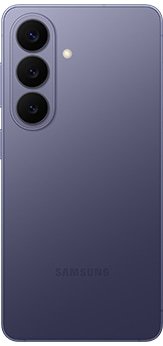
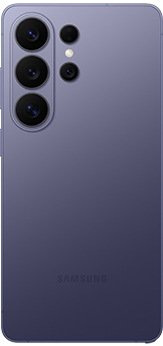
Cameras: zoom versatility versus Apple’s Pro workflow
| Feature | Galaxy S26 | Galaxy S26 Ultra | iPhone 18 Pro | iPhone 18 Pro Max |
|---|---|---|---|---|
| Main camera | 50MP, f/1.8 | 200MP, f/1.4 | 48MP; variable f/1.48, f/1.8, f/2.8, f/4.0 | Same main camera specification as Pro |
| Ultrawide | 12MP, f/2.2 | 50MP, f/1.9 | 48MP, f/2.2; macro photography | Same as Pro |
| Dedicated telephoto | 10MP, 3×, f/2.4 | 10MP 3× f/2.4 + 50MP 5× f/2.9 | 48MP, 4×, f/2.8 | Same as Pro |
| Sensor-crop zoom labels | 2× optical-quality | 2× and 10× optical-quality | 2× and 8× optical-quality | Same as Pro |
| Front camera | 12MP, f/2.2 | 12MP, f/2.2 | 18MP Center Stage, autofocus | Same as Pro |
| Creator video highlights | Nightography; Super Steady/Horizontal Lock features | 8K/30; 4K slow motion up to 120fps; APV codec | 4K Dolby Vision up to 120fps on main; ProRes RAW; Apple Log 2 | Same headline video features as Pro |
| Extra creative controls | Galaxy photo-editing tools | Extra physical telephoto option; S Pen support | Manual aperture/shutter/white-balance controls; LiDAR | Same controls and LiDAR as Pro |
Sources: Apple US camera/video specifications, Samsung AU Ultra technical sheet and Samsung’s linked launch specification table. Some recording modes have lens, frame-rate, accessory or external-storage requirements; for example, Apple’s 4K/120 ProRes recording requires external recording.
The Ultra is my camera-flexibility recommendation because it gives you two dedicated telephoto choices. That is a useful hardware distinction for travel, portraits and distant details. It does not prove that every Ultra photo beats every iPhone photo. Sensor resolution, processing, motion and lighting all affect the result.
Do not count “optical-quality” sensor crops as extra physical lenses. Samsung’s 10× and Apple’s 8× labels are not the same thing as having dedicated 10× or 8× telephoto cameras. Compare samples at the framing you actually use instead of choosing the largest advertised zoom number.
For a creator already editing Apple Log or ProRes footage, either iPhone Pro is the more natural workflow shortlist. The Max does not buy a fundamentally different rear-camera system: its appeal is the screen and battery headroom. Before switching platforms, test your editor’s support for the exact codec and colour profile. Samsung’s APV is also a professional workflow option, not a reason to assume every editing app will handle footage identically.
Performance, battery and charging
| Feature | Galaxy S26 | Galaxy S26 Ultra | iPhone 18 Pro | iPhone 18 Pro Max |
|---|---|---|---|---|
| Processor | Snapdragon 8 Elite Gen 5 for Galaxy or Exynos 2600; market-dependent | Snapdragon 8 Elite Gen 5 for Galaxy | A20 Pro | A20 Pro |
| Battery capacity | 4,300mAh typical | 5,000mAh typical | Not stated on Apple’s consumer specification page | Not stated on Apple’s consumer specification page |
| Advertised wired charging | Up to 55% in about 30min with 25W adapter | Up to 75% in about 30min with 60W adapter | Up to 50% in about 15min with compatible 60W-capable AVS adapter | Same charging claim as Pro |
| Wireless maximum | Up to 15W with compatible setup | Up to 25W with compatible setup | MagSafe/Qi2 up to 25W | MagSafe/Qi2 up to 25W |
| Reverse wireless | Wireless PowerShare | Wireless PowerShare | No equivalent reverse-wireless feature listed | No equivalent reverse-wireless feature listed |
| Apple rated video playback, AU / US | Not directly comparable | Not directly comparable | 34h / 36h | 43h / 45h |
Sources: Samsung charging support, Samsung’s launch table, and Apple’s regional specifications above. Charging figures are manufacturer lab claims, not results measured by AJ. The adapter’s rated wattage is not a promise of continuous power drawn by the phone; temperatures, cables and charge level matter.
The battery table deliberately avoids declaring an across-brand endurance winner. Apple’s playback test and Samsung’s capacity numbers do not measure the same thing. Within Apple’s own ratings, the Max offers more endurance than the Pro; that is useful for choosing between those two. For a reliable Samsung-versus-Apple ranking, we would need the same brightness, network, workload and test procedure on all four.
All four are premium-performance phones on paper. A chipset name cannot tell you which runs your particular game most smoothly after half an hour. Game optimisation, cooling, graphics settings and sustained power limits matter. If gaming is a priority, compare the exact regional S26 chipset and look for a repeatable sustained-performance test rather than a single peak benchmark score.
AI, software, productivity and connectivity
| Feature | Galaxy S26 | Galaxy S26 Ultra | iPhone 18 Pro | iPhone 18 Pro Max |
|---|---|---|---|---|
| Software family | Android / One UI | Android / One UI | iOS 27 | iOS 27 |
| AI suite | Galaxy AI, Photo Assist, Now Nudge, Now Brief | Same Galaxy AI family | Apple Intelligence and Siri AI | Same Apple AI family |
| Unlocking | Fingerprint authentication | Fingerprint authentication | Face ID | Face ID |
| Pen / desktop productivity | No S Pen; DeX support | S Pen; DeX support | No S Pen or Samsung DeX | No S Pen or Samsung DeX |
| Wireless | 5G; Wi-Fi 7; Bluetooth 5.4 | 5G; Wi-Fi 7; Bluetooth 6.0; UWB | 5G; Wi-Fi 7; Bluetooth 6; UWB; Thread | Same listed standards as Pro |
| USB | USB-C | USB-C; USB 3.2 Gen 1 | USB-C, USB 3 up to 10Gbps; DisplayPort | Same as Pro |
| SIM regional note | Check exact regional SKU and carrier | AU SKU lists nano-SIM and eSIM | AU: nano-SIM + eSIM/dual eSIM; US: eSIM-only | AU: nano-SIM + eSIM/dual eSIM; US: eSIM-only |
| Safety / security highlights | Samsung Knox; security updates | Knox; Privacy Display; security updates | Emergency SOS via satellite; Crash Detection; Find My | Same listed Apple safety features as Pro |
Samsung launched these phones with Android 16/One UI 8.5; the installed version now depends on the update rollout and region. Samsung’s AU Ultra support page already lists an Android 17 manual. Its listed security-support period runs to February 2033. Apple’s consumer specification page does not give an equivalent fixed end-of-support date, so this guide does not invent one.
Sources: Samsung DeX compatibility, Samsung’s technical sheet and launch table, and Apple AU/US specifications. DeX on an external display should not be confused with the discontinued DeX-for-PC experience on these newer models. AI, satellite services, cellular bands and language support have regional and account conditions.
Choose the platform that works with the accessories and apps you already rely on. If you own an Apple Watch and regularly move files between an iPhone and Mac, the cost of switching can include more than a handset. If you prefer Android customisation or need a monitor-based workspace, Galaxy deserves the closer look. Try your must-have work apps before deciding.
AI is not a universal tie-breaker. Write down two tasks you actually need—such as editing a photo or finding information from a message—and check that they work in your language, country and apps. The presence of an AI label does not make the output dependable enough to skip checking important information.
US and Australian prices: compare the same storage
| Feature | Galaxy S26 | Galaxy S26 Ultra | iPhone 18 Pro | iPhone 18 Pro Max |
|---|---|---|---|---|
| US manufacturer shop listing | US$849.99 shown in model selector (was US$999.99) | US$1,149.99 shown on 256GB buying page (was US$1,399.99) | US$1,199 | US$1,299 |
| Apple AU outright / Samsung AU live pricing | See local configurator; exact current quote not independently captured | See local configurator; exact current quote not independently captured | A$2,099 | A$2,299 |
Samsung’s promotional buying pages and overview pages can show different price references. Treat the figures above as the observed shop-page display, not a guaranteed checkout quote. US tax, eligibility, colour and promotions can change the final amount. Australian prices are not currency conversions. No trade-in credit or monthly carrier subsidy has been subtracted in this table.
Shop/check terms: S26 US · Ultra US · S26 Australia · Ultra Australia · iPhone US · iPhone Australia. Confirm the exact model: Samsung’s combined selector also contains S26+ and S26 FE, which are not part of this comparison.
Which phone would I recommend?
- Best lightweight Android: Galaxy S26. My pick if comfort, everyday use and lower cost matter more than the biggest camera system. You give up the Ultra’s extra telephoto, pen and privacy screen.
- Best Android feature set: Galaxy S26 Ultra. My pick for someone who will use the pen, larger screen, zoom options or monitor workflow. Buy it for those capabilities, not simply the Ultra name.
- Best balanced iPhone: iPhone 18 Pro. My default Apple recommendation: the core Pro camera and creator features without the Max’s extra bulk.
- Best large iPhone: iPhone 18 Pro Max. Choose it for the bigger viewing area and higher Apple endurance ratings. Do not pay extra expecting a wholly different camera system.
My overall buying advice: if you are happy with iOS, start with the 18 Pro and move to Max only when size or endurance justifies it. If you want the widest Android toolkit, shortlist the S26 Ultra; if those extras would go unused, the S26 is the more sensible option. There is no honest universal winner for camera quality, reception or real-world battery life without controlled testing of the exact models.
Common questions
Is the S26 Ultra automatically better because it has 200MP? No. Resolution is one camera characteristic; lens choice, processing, motion and lighting matter. Its clearest specification advantage here is hardware versatility.
Does Pro Max have better cameras than Pro? Apple lists the same headline rear-camera and video features for both. The larger phone’s screen and battery ratings are the key reasons to move up.
Can I use the US specification sheet when buying in Australia? Not for every detail. The iPhones’ SIM support and battery ratings differ in these regional pages, and Galaxy chipsets/configurations can vary. Check the local SKU before importing.
For more buying context, read our iPhone Duo versus iPhone Pro guide, browse buying guides, or watch AJ’s actual video reviews.
Editorial method: manufacturer specifications and store listings checked 4 November 2026. This covers major buying-relevant features; the linked technical sheets contain the full band lists, accessibility options, codecs and regional footnotes. We have not claimed first-hand testing or assigned invented performance scores. Brand images belong to their respective manufacturers.