
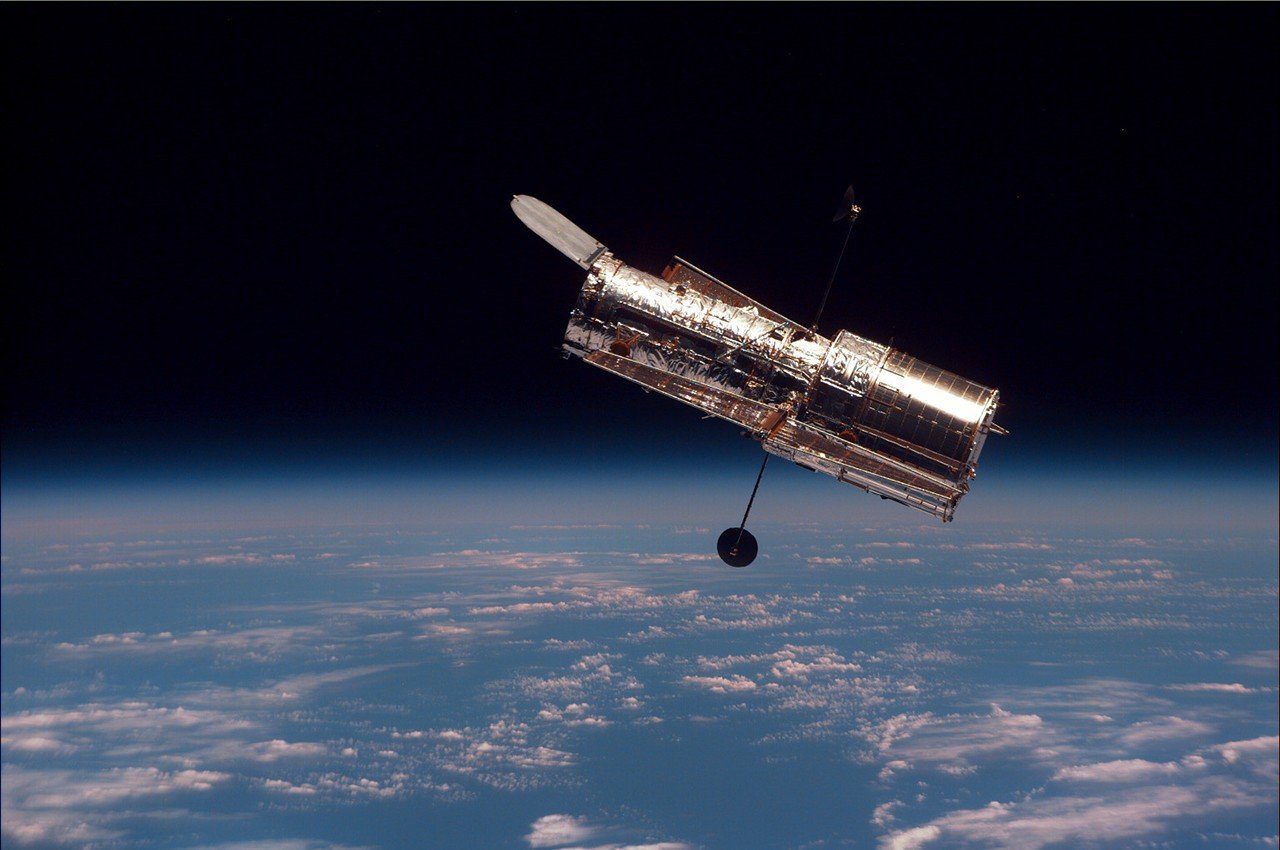
NASA is asking commercial companies what they could do to extend Hubble’s working life—or help bring its mission to a safe conclusion. The agency’s request is an early information-gathering step, rather than an announcement that a rescue flight has been approved.
What NASA has actually asked for
According to NASA’s 30 October update, a request issued on 29 October seeks industry capabilities for three possibilities: raising Hubble’s orbit, servicing the telescope, and supporting controlled re-entry or disposal at the end of its mission. These are alternatives under consideration, not a list of funded missions.
Why those options are different
Moving an observatory into a higher orbit addresses its trajectory. Repairing or improving an observatory addresses the equipment that makes science possible. Planning an end-of-life manoeuvre addresses what happens when operations finish. Treating all three as a single “Hubble rescue” hides the different engineering and financial questions each would have to answer.
For readers following space technology, the distinction matters. A company describing an attractive concept has not necessarily demonstrated that it can approach a particular spacecraft, work safely around it and complete a mission within an acceptable budget. A successful proposal would need a credible plan from launch through the final manoeuvre.
What a convincing commercial proposal would need to explain
Our analysis is that any serious offer should make four things understandable: the mission objective, the approach to protecting the observatory, the evidence that the servicing technology is ready, and the practical division of responsibility between NASA and the provider. A glossy animation cannot answer those questions on its own.
The commercial angle is interesting because it asks whether specialised services could support a valuable existing asset. The wider technology lesson is familiar: extending the useful life of equipment can be attractive, but only when the intervention itself is justified. A longer mission is valuable when its benefits exceed the cost and risk of making it possible.
What to watch next
Watch for NASA’s assessment of industry responses, followed by any concrete procurement or mission decision. Those would be more meaningful milestones than another speculative rendering. Until then, the accurate headline is that NASA is exploring options.
Source: NASA, linked above. Analysis is AJ Techno Freak’s interpretation; no servicing mission is presented here as approved. Image: NASA/ESA, via the NASA announcement.
Source used for fact-checking: https://www.theverge.com/science/1024239/nasa-commercial-space-save-hubble